Papua New Guinea

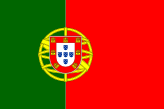
Country flag available in this resolutions
| Icon x |  |
| Icon x |  |
Papua New Guinea
Papua New Guinea: A Land of Unparalleled Diversity
Papua New Guinea (PNG), situated in the western Pacific Ocean, is a nation of extraordinary geographical and cultural complexity. Sharing the eastern half of the island of New Guinea with Indonesia, it also encompasses over 600 smaller islands, many of which are volcanic in origin. This archipelago nation is a tapestry woven from dramatic mountain ranges, dense rainforests, and extensive coastlines, creating a mosaic of distinct environments that have fostered unparalleled biodiversity and cultural isolation. The sheer ruggedness of its terrain, characterized by the central spine of the New Guinea Highlands, has historically presented significant challenges to communication and transportation, contributing to the remarkable linguistic and cultural diversity that defines the country. From the towering peaks of Mount Wilhelm, the highest point in Oceania, to the low-lying coastal plains and the vast mangrove swamps, PNG’s geography is a testament to the dynamic geological forces that have shaped this part of the world. The country’s location on the Pacific Ring of Fire also means it is prone to seismic activity and volcanic eruptions, further shaping its landscapes and the lives of its inhabitants.
The demographic landscape of Papua New Guinea is as varied as its geography, boasting an astonishing array of ethnic groups and languages. It is estimated that PNG is home to over 800 distinct indigenous languages, making it the most linguistically diverse country on Earth. This incredible linguistic richness reflects a history of human settlement and migration spanning millennia, with different communities developing in relative isolation, adapting to their specific environments and forging unique cultural traditions. The population, though relatively small in global terms, is spread across a vast and often inaccessible territory. While the majority of people live in rural areas, engaged in subsistence agriculture, there is a growing urban population, particularly in the capital city, Port Moresby, and other major centers like Lae and Mount Hagen. Traditional social structures, based on kinship, clan, and village communities, remain highly influential, shaping social interactions, political organization, and economic activities. The concept of „wantok,“ a system of reciprocal obligations and support among those who speak the same language or belong to the same clan, is a fundamental aspect of PNG society. This intricate web of social relationships, while fostering community cohesion, can also present challenges in the context of national governance and development. The population is youthful, with a significant proportion of the inhabitants being under the age of 25, presenting both opportunities and challenges for future development and employment.
Papua New Guinea’s economy is characterized by a dualistic structure, with a significant formal sector driven by natural resource extraction and a large informal sector based on subsistence agriculture and small-scale trade. The country is richly endowed with natural resources, including vast deposits of gold, copper, and other minerals, as well as significant reserves of oil and natural gas. These commodities form the backbone of PNG’s export earnings, making the country highly dependent on global commodity prices. The mining and petroleum sectors have historically contributed substantially to the national GDP and government revenue, attracting significant foreign investment. However, this reliance on natural resources also exposes the economy to volatility and can lead to issues of resource governance, environmental management, and equitable distribution of wealth. Beyond the extractive industries, PNG’s economy also includes a developing agricultural sector, producing crops such as palm oil, coffee, cocoa, and copra for export, alongside the essential subsistence farming that sustains the majority of the population. The fisheries sector also holds considerable potential. Despite the nation’s resource wealth, many Papua New Guineans experience poverty, a situation often exacerbated by challenges in infrastructure development, access to education and healthcare, and effective governance. Efforts are ongoing to diversify the economy, promote sustainable development, and create more equitable opportunities for all citizens.
The history of Papua New Guinea is a long and complex narrative of human habitation, colonial influence, and the struggle for independence. Archaeological evidence suggests human presence in PNG dating back tens of thousands of years, with early inhabitants developing sophisticated agricultural practices and complex social systems. For millennia, diverse cultural groups lived in relative isolation, developing their unique languages, traditions, and ways of life. The arrival of European explorers in the 16th century marked the beginning of external contact, but sustained colonial presence did not truly take hold until the late 19th century. The island of New Guinea was divided between the Netherlands (Dutch New Guinea, now part of Indonesia), Germany (German New Guinea), and Great Britain (British New Guinea, later the Territory of Papua). Following World War I, Australia took over the administration of German New Guinea, and after World War II, it administered both Papua and the Territory of New Guinea under a United Nations mandate. During the colonial period, the indigenous populations experienced significant disruption to their traditional ways of life, with the introduction of new economic systems, social structures, and political administrations. The period of Australian rule saw the gradual development of self-governance, culminating in Papua New Guinea gaining full independence on September 16, 1975. Since independence, PNG has navigated the challenges of nation-building, striving to unify a diverse population, develop its economy, and establish stable democratic institutions. The country has faced issues related to political stability, law and order, and the equitable distribution of its considerable natural resources, all while striving to preserve its rich cultural heritage in the face of modernization and globalization. The legacy of colonialism, coupled with the inherent complexities of its geography and social fabric, continues to shape PNG’s ongoing journey.
Information about country Papua New Guinea
Automated text translation, excuse errors, please!
Informations are from the publication CIA The World Factbook.
Country Papua New Guinea is situated in a location / continent East Asia. Papua New Guinea has an area of 462 840 km2 and 6 310 129 residents. The highest point has a height 4 509 above sea level. and it is called Mount Wilhelm. The lowest point is located at the level of 0 above sea level and it is named Pacific Ocean. System of government is Republic, Commonwealth member country and the date of independence 16th September 1975. The capital city is Port Moresby. Papua New Guinea has the international abbreviation PP.
Papua New Guinea - economy
Total gross domestic product (GDP) is 17 080 000 000 $. Total gross domestic product per capita in purchasing power parity is 2 600 $. GDP grows by 8.90 % a year. Inflation (consumer price index) is equal to 8.50 % a year. Papua New Guinea have 3 896 000 working-age population (from a total population 6 310 129 people). Unemployment is at 1.90 %. Papua New Guinea issued 3.10 % GDP to healt care and 1,10 % GDP to army. The public debt of the country is 22.10 % GDP. The total amount of foreign debt is 5 296 000 000 USD.
Papua New Guinea - transport and telecommunications
Papua New Guinea has 9 349 km of roads and 562 airports. The total length of waterways (navigable rivers, canals, etc.) is 11 000 km. There is registered 31 ships.
Number of active mobile phones (sim card) in the country Papua New Guinea is 2 400 000. Number of active fixed telephone lines is 130 000. Papua New Guinea has 125 000 internet users, who have the available 4 847 Internet connections. Papua New Guinea has been assigned a domain first Choose range .pg.
Papua New Guinea - demography
As suggested above, Papua New Guinea has 6 310 129 people. Population growth is in the amount 1.94 % per year. Number of children born per 1000 population per year is 25.92.Every mother has average 3.39 children. The infant mortality rate is 42.05 and maternal mortality 230.00 deaths per 100,000 births. Average estimated life expectancy makes 66.46 years. Mortality is 6.56 people per 1000 population per year.
Papua New Guinea - energetics
Papua New Guinea consumes a year 3 098 000 000 kWh of electricity. Annual electricity production is 3 331 000 000 kWh in power plants with a total installed electrical capacity 700 000 kW. Papua New Guinea exports 0 kWh and imports 0 kWh of electricity per year Energy mix of power generation is as follows: fossil fuels: 61.1 %, nuclear energy: 0 %, renewable: 8.0 %, hydropower: 30.9 %. The country Papua New Guinea is harvested annually 30 000 barrels of oil.
Dále doporučujeme:
Odkazy na partnerské webyOdkazy nejen na naše partnerské weby
Naše tipy na zajímavé stránky
Linky na partnerské weby
Doporučené odkazy
Flags of countries
World flags
World countries flags
 |
 |
 |
 |
 |
 |
 |
 |
 |
 |
 |
 |
 |
 |
 |
 |
 |
 |